Table of Contents
3. The Bass Clef & Your Left Hand
Theory Lesson: The Power of the Bass
While your right hand usually plays the melody, your left hand brings the groove and sets the mood. To write down these low, rich sounds, we use a different symbol: the Bass Clef.
The Bass Clef (or F-Clef)
The Bass Clef looks a bit like an ear or a backwards 'C' followed by two dots. Musicians often call it the F-Clef. If you look closely, those two dots perfectly frame the second line from the top. That is your left-hand bullseye! It tells us: "The note on this line is F."
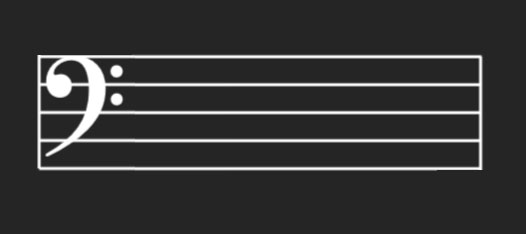
Mapping the Lower Notes
We still use the same A through G alphabet, but the notes sit on different lines than they did in the Treble Clef. Learning this new map is a fun challenge—your brain is learning how to read two different languages at the same time!
- The Lines (Bottom to Top): G, B, D, F, A. (A fun way to remember this is: Good Boys Do Fine Always).
- The Spaces (Bottom to Top): A, C, E, G. (Just remember: All Cows Eat Grass).

Your Secret Weapon
Why does the left hand matter so much? Because the lowest note you play actually changes how everything else sounds! If your right hand plays a happy C chord, but your left hand plays a low A, the whole thing suddenly sounds moody and jazzy. That is why mastering the Bass Clef is the foundation of everything you will play.
Self-Check Questions
- Question: What is the note on the very bottom line of the Bass Clef?
Click to reveal answer
Answer: It is a G. - Question: What is the note on the very top line of the Bass Clef?
Click to reveal answer
Answer: It is an A. - Question: Why is the Bass Clef so important in jazz and modern music?
Click to reveal answer
Answer: Because the lowest note you play completely changes the mood and identity of the chord above it!
Practice Session: Left-Hand Basics
The Goal: Get comfortable finding notes on the Bass Clef without confusing them with your Treble Clef map.
The Execution: Open JazzPianoLab and run through these Bass Clef exercises:
- 3.1 Bass Lines - G, B, D, F, A: Master the left-hand lines using Good Boys Do Fine Always.
- 3.2 Bass Spaces - A, C, E, G: Get comfortable with the spaces: All Cows Eat Grass.
- 3.3 Bass: Lines & Spaces: Mix the lines and spaces to read fluently with your left hand.
Don't have JazzPianoLab yet?
Reading about theory is only half the battle. To truly learn sight-reading, your hands need to react instantly. Plug in your MIDI keyboard and let our interactive engine guide you through these exact exercises.
Start 7-Day Free Trial (No Credit Card)Ready to build your musical foundation?
Unlock Interactive Practice for this course and the entire JazzPianoLab training library today.